“We are not retreating. We are advancing in another direction.”
“It is fatal to enter any war without the will to win it.”
“Old soldiers never die; they just fade away.
“The soldier, above all other people, prays for peace,
for he must suffer and be the deepest wounds and scars of war.”
“May God have mercy upon my enemies, because I won't .” “The object of war is not to die for your country but to make the other bastard die for his.
“Nobody ever defended anything successfully, there is only attack and attack and attack some more.
“Fixed fortifications are a monument to the stupidity of man." “It is foolish and wrong to mourn the men who died. Rather we should thank God that such men lived.
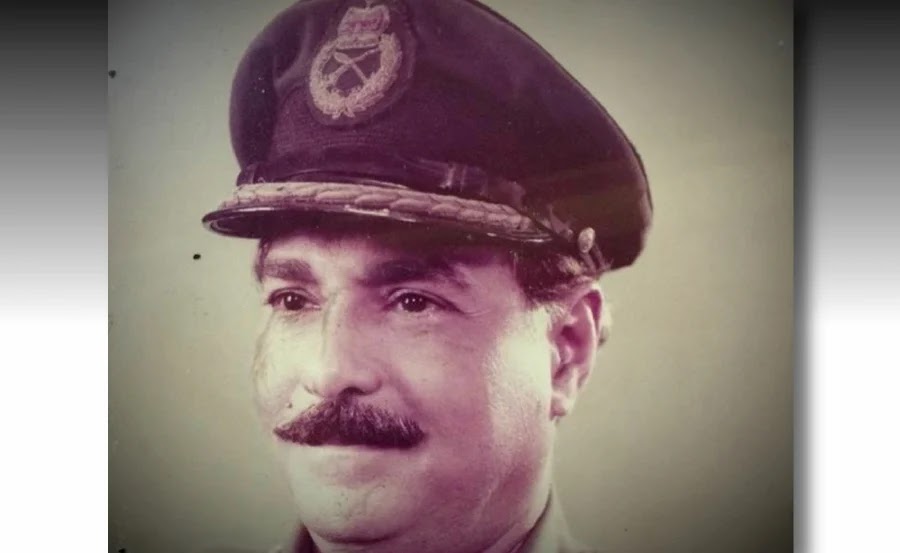
Remembering a Warrior of Seventh Rangers - Captain Tong Lye Heng
Monday, September 26, 2022
Seventh Ranger..
Not a lone Ranger...
Or Burt Lancaster...
But got out of danger....
From the communist onslaught.....
But still in last laughter....
For pulling off a battle scarred caper....
7th Ranger Warrior in heartland of terror.....
Has given more to nation, than an Army Commander - Loga
Cpt Tong Lye Heng (left), army veteran and Lt Col Wong Ah Jit, secretary of MACVA.
Out of nowhere, a gunshot came from a distance and hit Captain Tong’s left hip.
“I would come to learn later after the incident from my sentry that the enemy was already walking to a claymore mine, but since it was installed improperly, it did not explode," he recounted being shot by a Communist insurgent.
Tong Lye Heng, now a 71-year-old army veteran was reliving the moment when he was fighting the communists in the dense forests of Grik, Perak during the 1970s and nearly lost his life defending his country.
Now a proud member of the newly formed Malaysian Armed Forces Chinese Veterans (MACVA), Captain Tong's story is but one of the thousands of wounded and fallen unsung heroes who have put our nation's security first ahead of their personal life.
Throughout the country’s 60 years of independence, the country has survived through many threats thanks to the sacrifices of our warriors, such as the communist insurgency during the 1970s, the Konfrontasi with Indonesia and recently, the invasion of Lahad Datu by the self-styled Sulu Sultanate challenging Malaysian sovereignty over Sabah.
Captain Tong's discharge papers.
In conjunction with Warrior's Day, Malaysian Digest is putting the spotlight on our brave soldiers have been wounded and to honour those who lost their lives in the line of duty throughout the country’s history.
Veteran Shares His Experience Fighting The Communist During The Emergency
Cpt Tong Lye Heng (left), army veteran and Lt Col Wong Ah Jit, secretary of MACVA.Cpt Tong Lye Heng (left), army veteran and Lt Col Wong Ah Jit, secretary of MACVA.
The
trousers Captain Tong wore when he was shot on 10 June 1971. The hole
in the right is where the bullet hit him in the hip, while the stains
near the hole are blood stains from the wound.
“I was assigned as the leader for 7th Ranger Platoon in the Sungai Petani camp. The 26 soldiers in that platoon were newly assigned to me at that time, so I did not know them very well.
“The boys who I was familiar with, whom I spent three months in the jungle, were assigned to other posts,” recalled Captain Tong,” who joined the army on 6th March 1969.
On 10th June 1971, his battalion established a base in the forest, and has placed claymore mines and other defenses around the outside perimeter of their base.
After his boys has finished placing the mines and gun placements, Captain Tong decided to conduct some reconnaissance at the south of the base to check whether his boys did them perfectly.
“My sentry actually spotted the enemy much earlier, before the enemy shot me, and he tried to shoot him first with his light machine gun. However, he was panicking, and could not realise that his safety catch was on the ‘Safe’ position and not in ‘Rapid Fire’ or ‘Automatic’ position,” the captain shared his brush with death with Malaysian Digest.
Cpt Tong (right) during a training session in Sungai Petan
A safety catch is a mechanism in all guns that is designed to prevent accidental discharge of the bullets. When a safety catch is put in the ‘Safe’ position, a gun cannot shoot.
He said he did not know that the soldier he picked as a sentry was an inexperienced soldier, since he was not familiar with the new platoon. Had it been if he was with his old platoon, he would know who would be more suited for sentry and other roles.
“There were two enemy soldiers, one of them saw me first and immediately shot me.
The trousers Captain Tong wore when he was shot on 10 June 1971. The hole in the right is where the bullet hit him in the hip, while the stains near the hole are blood stains from the wound.
“We only saw two soldiers, but in the thick of the forest, we could not know if there were more of them behind the two soldiers,” he recalled. The communists often send groups of two soldiers as scouting parties to scout the area before sending in the main fighting force.
Captain Tong’s soldiers immediately returned fire and ordered artillery strikes to hit the area around the enemies, while his second-in-command contacted the nearby headquarters and asked for a helicopter to lift the captain out of the forest.
Two hours later, the Nuri helicopter arrived but received heavy fire from the communists. However, an army medic managed to rappel down to temporarily treat Captain Tong, before the helicopter retreated.
“The medic gave me shots of morphine and IV, and that helped save my life,” he said.
After some time, the Nuri helicopter returned to the scene and this time an Alouette helicopter followed as well, to provide covering fire while Captain Tong was being rescued.
“The whole thing was reminiscent to that of the Vietnam War,” said Captain Tong.
He was lifted to Klian Intan and then to a hospital in Penang. He was immediately taken to an operating theatre for an operation. According to the doctor, the bullet missed his spine by half of an inch.
Captain Tong was treated at the Penang Hospital for three months, and then spent a month at the Terendak camp. Four months after he was shot, he returned to the Sungai Petani headquarters to resume his duty.
However, he was not assigned to the frontlines and instead handled the administration and tactics of the war effort.
“Later on, I was assigned as an intelligence officer and I helped devise an operation to strike the communists in Gunung Bongsu.
“We managed to kill some communists in that operation,” recalled the captain, who managed to use that chance to strike back at the enemy who almost took his life from that operation.
Captain Tong did not stay long in the army, and was honourably discharged on 9th October 1976. His disciplined life in the army has taught him incredible lessons that have helped him adapt to the civilian life.
Captain Tong's discharge papers. Captain Tong's discharge papers.
“After the army, I joined the plantation industry as a manager. When I was in the army, I had valuable lessons in team management as a captain and head of a platoon.
“That experience translates perfectly to managing a plantation,” he said. After 18 years in the plantation industry he switched places to work in the cargo shipping sector. Now, he runs his own cargo shipping company.
Cpt Tong (right) during a training session in Sungai Petani.Cpt Tong (right) during a training session in Sungai Petani.
Tribute to a respected commanding officer By Adrian David - June 4, 2022 @ 5:59pm
Sunday, June 05, 2022
Col Harchand Singh during his service days
New Straits Times : PORT DICKSON: The late Col (Rtd) Harchand Singh had the distinction of having commanded four Royal Ranger Regiment battalions. Till today, he still holds that record of helming the 4th, 2nd, 5th and 9th battalions.
Harchand, who turned 92 on April 7, died following an illness at his
Port Dickson home on May 24 and his remains were cremated at the
Sendayan Fairy Park, the next day.
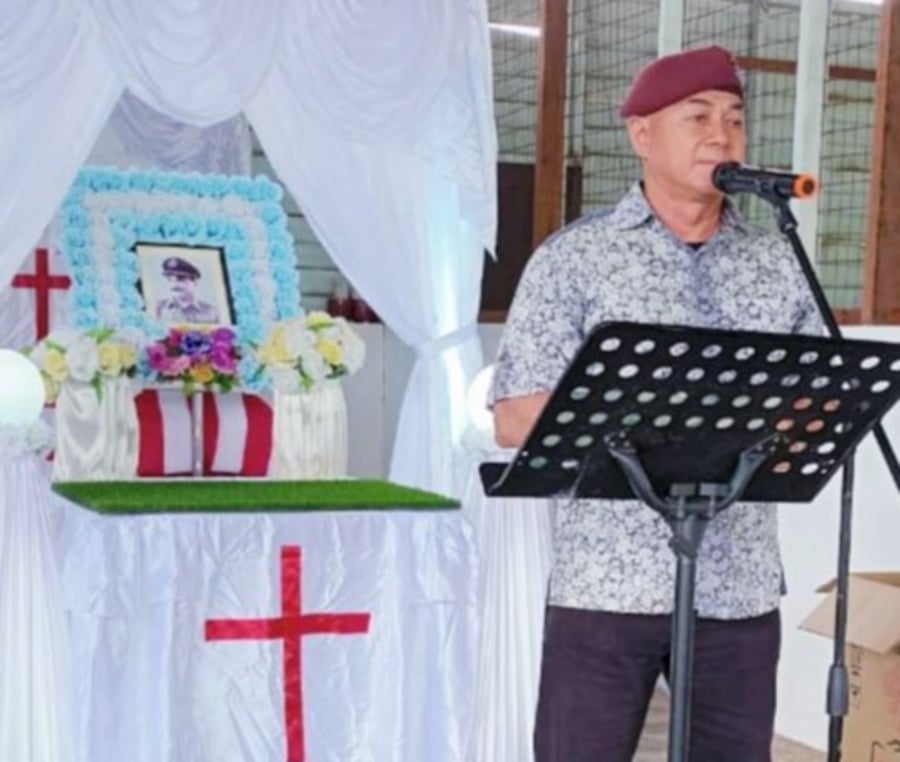
At his funeral, Harchand's former student, Major-Gen (Rtd) Datuk Toh
Choon Siang had high praises for his master, someone he has known for 45
years.
Harchand left a lasting impression
among his charges, whom he had often described as his 'precious jewels'
who fought alongside him in many battles against communist insurgents,
the Confrontation (with Indonesia) and the two Emergencies.
"I had known him since the day I joined the Army way back in January
1977, when my Short-Service Commission Intake 31 batch mates and I
reported for training at the Pre-Officers Cadet Training Unit (Pre-OCTU)
at Sebatang Karah camp in Port Dickson, Negri Sembilan.
"Harchand was the facility's commandant (as a lieutenant-colonel),"
said Toh, in his eulogy at Harchand's funeral in Port Dickson, recently.
Present to pay their last respects were Harchand's widow Eva Guest
and son Zoraveer Singh, Army Senior Officers Institute commandant
Brig-Gen Inderjit Singh and his deputy Col Suthan Venkatachalam, Army
Training and Doctrine chief of staff Col Jagjit Singh and its Colonel
Doctrine Col Norulhisham Mohd Shuib, Army Infantry Directorate deputy
director Col Wan Edenin Wan Mahsin, Negri Sembilan Veterans Association
secretary-general Major (Rtd) Sahi Kassim and Harchand's close buddy
Major (Rtd) A. R. Ramachandran.
Major-Gen
(Rtd) Datuk Toh Choon Siang presenting his eulogy at the funeral of the
late Col (Rtd) Harchand Singh in Port Dickson, Negri Sembilan. -
NSTP/ADRIAN DAVID
Also there were Toh's batch mates Lt Col (Rtd) Lee Chee Kiat, Capt
(Rtd) Loo Choon Chew, Capt (Rtd) Chong Phi Lip and Capt (Rtd) Steven
Liew Hon Seng.
They gathered around Harchand's coffin to accord him a final salute
as the 'Last Post' was played, before Toh handed over the national flag
symbolically to Zoraveer.
Toh, who retired as the Sibu, Sarawak-based Army First Division
commander in 2019, said Harchand's appointment to command four Ranger
battalions was something anyone could pride himself of.
Reminiscing his earlier service days, Toh said between 1983 and 1985,
he had the honour of serving under Harchand again as an instructor at
the Army Combat Training Centre (Pulada) in Ulu Tiram, Johor.
"A true officer and gentleman, Harchand was a great commander,
leader, father and elder brother to all of us in the Armed Forces.
"He sacrificed a good 33 years of his youth serving the Army with
distinction," said Toh, adding that Harchand was among the first group
of multiracial officers who joined the Pre-OCTU of the Federation
Military College in 1952.
"Harchand was among the early ones selected for cadet training, after
the famous 'Templer's 12' (12 young men hand-picked by British High
Commissioner, Field Marshal Tun Sir Gerald Templer to form the nucleus
of Army officers).
"After six months at Pre-OCTU, Harchand's group of 36 potential
officers were initially sent to Eaton Hall, England for a six-month
stint.
"He was among 24 who proceeded to the Royal Military Academy
Sandhurst, England for another six months before being commissioned as a
second-lieutenant in 1955 into the 1st Battalion Federation Regiment,"
said Toh.
Harchand was promoted to lieutenant-colonel in 1968 and first
commanded the 4th battalion (based in Ipoh, Perak), then the 2nd (Kota
Kinabalu, Sabah) a year later, 5th (Port Dickson) in 1972 and 9th
(Penang) in 1978.
He was promoted to colonel in 1981 as Pulada commandant and retired in 1985.
"Harchand lived a long and colourful life and we are going to miss him dearly.
"Though we are sad that he has to leave us but we should be happy at
the same time, because he need not have to endure anymore pain due to
his recent illness.
"On behalf of all his comrades, I would like to thank Eva for having taken such good care of him all these years.
"He would not have enjoyed the good life he had, without you," Toh said.
He thanked the church for organising the wake and the funeral service.
Toh commended the 8th Battalion Royal Rangers Regiment (Parachute),
led by commanding officer Lt Col Zahari Affandi Mat Noor, for arranging
the pall bearers to ceremoniously send off the Malaysian flag-draped
coffin of Harchand's cortege.
"Lastly, on behalf of Eva, Harchand's friends, relatives and former
comrades in arms, I will like to bid him a heartfelt farewell and may
you have a smooth journey to the better place.
Lest We Forget: 7th Rangers on the Rebounce, Lundu, Sarawak, 1972 By Lieutenant Colonel Baldev Singh Johl (Retired)
Tuesday, May 03, 2022
On 26th March 2022, I stood in silence for one minute with Lt Col Bathamanthan M, to honor those killed in an ambush 50 years ago due to some major tactical miscalculations. There have been many Whys, no answers.
I prayed for their souls to rest in peace. No one was under my command but we belonged to the same unit, 7th Rangers, one of the most scarred units in our army.
A monument has been built at the site of the ambush but there appears a lack of will to launch it. Do we not feel the pain?
Major
Sabdin Ghani as a 2nd Lieutenant in 7th Rangers who should have at
least been bestowed with a SP or PGB, when lesser individuals than him
were disgracefully honored because of connections
The bitterness is still in the mouth and the pain deep in our hearts. Fifty years have passed, the lives lost should not be lost in vain.
It was that un-fateful day on 26th March 1972, that an admin convoy from 7th Rangers, comprising an assorted group of ‘bottle washers’ was ambushed by a group of about 30 - 40 Communist Terrorists (CTs) along the Lundu-Biawak road. At that time, 7th Ranger’s main fighting force was operating in the Serian area in a special operation under 3rd Malaysian Infantry Brigade, Kuching, Sarawak. In the ambush, 15 soldiers were killed, 4 were wounded and the CT group captured a number of weapons and a TRA 906 radio set.
As this news dawned upon the unit’s fighting echelons in Serian, blood boiled past threshold levels. Having lost 15 of our soldiers there was little we could do from Serian, some 150km away from Lundu where 7th Rangers was stationed. Under our breaths we wowed revenge. Operation BELA was launched.
Redeployment, 27th March 1972
In the early hours of 27th March, we redeployed directly into our redesigned Area of Operations (AO). A Company (A Coy) was flown from a landing point (LP) at ferry point (intersection of road Lundu-Bau/Sg Stamin) and off loaded into the swampy area of Kg Mengkudu, some 10kms south of the ambush site. We spent the next 3 weeks searching with no joy. We were too far south. My platoon (No 3 Pl) was in a bad shape – fatigued and badly in need for some fresh cloths. I had returned the previous day from my Company Support Weapons course at PULADA, to be confronted with this tragedy. My Officer in Command (OC), Capt Sabdin Ghani, was on course in Australia. The company was commanded by the Company Second in Command (Coy 2IC), Lt Abdullah Hj Yusuf, a joyful officer but at this time there were no smiles, instead I could see he was breathing fire.
FIRST STRIKE, LT ABDULLAH HJ YUSOF, OPENING ACCOUNTS!
Rest & Replenishment, 15th April to 18th April 1972
On 15th April, A Coy was withdrawn to Tac Hq, at Lundu for some rest and replenishment. I was quick to get my boys their clothing exchanged, cleaned up weapons, ammunitions and conducted a hygiene inspection of the platoon. We caught up with some rest and I took some time to orientate myself to our unit’s AO. There was always a lot of activity going on in the operations room (Ops Room) and I guessed it was on enemy assessments and where we would be redeployed after our short rest.
There was also some time to catch up with the other officers in the unit. Generally, there was a gloom hanging over our heads. A major strike was needed to change this.
CT Signs Emerge, 18th April 1972
On the 18th April, at about 1500hrs, I was informed that a border scout had brought some “information”. We needed that! Lt Abdullah was called up to the Ops Room and when he returned, he called the Coy’s Orders group: “This morning (18th April) a CT group made inquiries about crossing Sg Stamin at a jungle fringe at Kg Perian (about 20 kms south of Lundu). They were dressed in green and carried weapons. It is assessed this group intends to cross Sg Stamin and head to Bau using the track leading to the Lundu-Bau road. Coy Hq and No 2 Pl will investigate this. When we make contact, Baldev, you will do the follow up. Be ready to move from here (Tac Hq)”. I was ready.
The Move Out
At 1800hrs, A Coy Hq and No 2 Pl moved out on 1 x Land Rover and 2 x 3-ton trucks: WO2 Abdul Rahman, also known as ‘Rahman Harimau’, the Company Sargeant Major (CSM) instructed the group “masa kita keluar kem, jangan pandang balik!” Whatever meaning it carried I took it was for good. I bided the group luck and saw them leave Lundu camp. They crossed the ferry point at Sg Stamin and debussed some 8 kms up road at a track junction branching off the Lundu – Bau road to Kg Perian. I geared up my platoon and waited for developments.
Linear Ambush
Under the moonlight Abdullah’s group moved silently along the track towards Kg Perian/Sg Stamin. At around midnight Lt Abdullah decided to stop and continue the move at first light. He set out a linear ambush along the track and carefully laid 2 claymore mines covering the killing area – the track towards the river. Once set, the group waited. The moonlight was bright enough to watch the front.
The Ambush is Sprung
About 30 mins later, four (4) figures (dark shadows) appeared walking slowly along the track heading towards the road junction. The figures suddenly stopped in the killing area. They must have sensed something unusual. The lead figure stamped his foot 4 times on the ground and the figures started moving backwards. Abdullah sprung the ambush igniting the claymore mines. This was followed by a brief fire fight before the peace of the night returned amidst the strong smell of gunpowder. Then it was a long wait to dawn as the ‘fogs of war’ crept it.
Abdullah reported the contact by morse code as there was heavy atmospheric interreference. I alerted my platoon and moved to the Communications Centre and kept myself updated on the situation. Details were sketchy but sufficient for my deployment. By 0600hrs my platoon crossed the ferry point and we deployed to the north of the contact site.
2 CTs Killed, TRA 906 Recovered!
At first light, Abdullah searched and mopped up the killing area. One CT lay dead close to the killing area and another was found a short distant away.
Abdullah reported the findings: “2 CTs KIA!” That was great, we got them! A short while later Abdullah reported the finding of 2 weapons and 4 packs.
A search of the packs was made. To our joy Abdullah found the radio set we lost in the ambush of 26th March 1972. It was neatly packed in one of the packs.
He reported: “We have recovered our TRA 906 radio set!”
At that moment, a voice rang out on the other side: “Golf Oscar Charlie speaking, confirm that you have recovered the lost radio set?”
Abdullah: “Yes! Confirmed it our radio set!”
The voice: “Well done! Keep it up!”
That was all we need, a good result. That day, 19th April 1972, our revenge began! These kills also marked the first operational success for of 7th Rangers since formation. There was great joy especially on hearing the recovery of our radio set. This was a morale booster: the gloom was lifted! The unit’s battle account was opened and we needed to put in more credit into the account.
Blood Trails
In the follow up operation, we found heavy blood trails and bits of human flesh scattered along the track to Sg Stamin where the trails were lost. It appeared another CT was severely wounded. It was later confirmed through other contacts, that the blood trail was that of another wounded CT who succumbed to the wounds. The information was decoded from letters captured during contacts elsewhere.
Charlie Company Scored Too, May/June 1972
The following months were spent on search and destroy just waiting to make the next contact. There were strikes by Charlie Company under Capt Ropee Adnan and Lt Zulkifly Abdul Rahman (late). Two CTs were KIA in the Titiakar area, about 15 kms away from Lundu in May/June 1972. In this contact again, atmospheric interference was heavy and communications difficult. I was deployed to set up a rebro station midway to relay results and instructions.
SECOND CONTACT, CAPT SABDIN GHANI, VALOUR DISPLAYED!!
More Information Surfaces, 24th July 1972
During our next standby at the Tac Hq, there was a similar report to that of our first contact in April. This time my OC, Capt Sabdin Ghani was back in command.
At about 1600hrs on 24th July 1972, Capt Sabdin was called to the Ops Room by the Commanding Officer (CO), Lt Col Hussein Ali Piah. In the Op Room, the unit IO, Lt Dan Yunan and a scruffy looking border scout were waiting. Behind the scruffy looks, the information we needed was splashed: a CT group had been conducting regular visits to an outlaying hut/house (isolated) in Kg Kabong, about 10 kms east of Kg Selampit, a village located along Sungai Stamin, some 50 kms south of Lundu. The group usually stayed long hours till midnight and had been coming almost every night. That was all Capt Sabdin wanted. If this border scout travelled some 60 kms to pass this information, then there was high chance it to be true and an opportunity to be exploited.
After some detailed discussions, Capt Sabdin returned to the Coy lines. It looked like he had a plan worked out in his head.
“We are going to get this group!”
Capt Sabdin called his Orders Group, selected his light strike team and tasked me as the standby again for follow up. His orders were brief and to the point: “We are going to get this group! Baldev, you will be on standby here at Tac Hq. You move immediately when we make contact”. Capt Sabdin had a style of delivering his orders – short, sharp and he had a very menacing look on his face. I noticed how he gritted his teeth. I saw determination on his face, it inspired me.
Preamble – I Report to 7th Rangers, April 1971
I commissioned on 16th April 1971 at the Royal Military College (RMC), Sg Besi or Iron River as many of us referred it to. I was the lone ranger to report to 7th Rangers at Tac Hq in Kelian Intan, Kroh, Perak. The unit was then on Ops Kota. After a brief orientation to the unit, thanks to the noisy group: the Adjutant, Capt Norman Sta Maria (late), the IO, Capt Soman Selvaraj (late) and our Regimental Medical Officer Capt Dr Yong (Uncle ‘Fangs’- big eater!), I was set to move on. The orientation included initiation of the ‘Rainbow Special’, seven “assorted drinks” to signify 7th Rangers, to be downed in one go at the mess: I do not know how but I did it! Capt Ropee Adnan, the OC of C Coy, had me disappear from the mess during the 2 nights at Tac Hq, into the bunker beside the mess. It was very cold at night and the mess staff were kind to throw me some blankets. Some orientation it was, whatever was thrown at me I took it! But I looked forward to joining the subunit I was meant to be in.
The CO, Lt Col Hussein Ali Piah after welcoming me said: “You will join A Coy in Kg Alai”. It was located some 15 kms down the Klian Intan-Grik road.
I report to Capt Sabdin Ghani, OC A Coy
A Coy was commanded by Capt Sabdin Ghani, a Sabahan with some dashing looks. I was to command no 3 Pl, Call Sign 13 – it was a great coincidence, I was from Regular Intake 13 and my order of merit was 13th at my commissioning! I liked it – 13!.
Capt Sabdin welcomed me to the coy. He was warm but stern and after my interview I felt I had reached ‘home’, after being transformed from a milk-selling schoolboy into a cadet and then a 2nd Lt, the output of our proud RMC.
Capt Sabdin was very uncompromising on op discipline. On my very first op in the Kg Kerunai area in Grik, Perak in May 1971, one of my boys, lost a GPMG 7.62mm link-belt of 250 rounds. He only reported the loss on our return to base at Kg Alai. Naturally I had to report the loss to Capt Sabdin. He was not happy!! Bad start for me! He gave me a pounding and sent my platoon back immediately to recover the ammunition. Luckily, we found the belt at the place we based on the first day. On my return, I got the second dose, a lesson on leadership and responsibility that I never forgot. Capt Sabdin made me go through my first day sitrep in which I should have reported the loss. It was first lesson for me and it came quick on my very first mission.
Over some time, I got used to Capt Sabdin’s style of command. Many of his attributes I picked up and applied them myself. He coached me well and there was always plenty to learn. I walked tall in the unit. Obviously, Capt Sabdin became my mentor. He was a great sportsman too and I was pleased that we were in the unit’s hockey team. We displayed our skills well in local competitions in Sg Petani, Kedah where we challenged some top-ranking clubs, won some lost some.
Critical Considerations, 24th July 1972
Having analysed the requirements for the mission, Capt Sabdin selected a lean group – it was obvious, he wanted to travel light and fast. A vital criterion was the move upstream Sg Stamin at night for about 50 kms in two local boats. This needed experience and sound knowledge of the river especially at night. The Military Intelligence Officer (MIO) staff assisted in identifying two experienced boatmen. They were ready but unaware of the mission ahead.
Group Selection
Capt Sabdin’s strike team comprised Sargeant (Sgt) Lukas, a tough looking Sabahan, who took his orders and kept them in his memory - he was unable to read and write, so he remembered the orders well in his head. Lukas was also a feared sergeant and a disciplinarian. Capt Sabdin had full trust in him. Others in the group included Lance Corporal (LCpl) Rahman Puteh, a lively and very nitty character but at this time he walked around biting his lips. LCpl Ibrahim, my basketball teammate was the medical orderly. There was a radio operator and 7 others – rough and tough looking. Morale was high and they appeared very excited of the mission. I guessed they like it as it broke away from the routine search and destroy stuff.
The Night Move
At 1800hrs, I followed the group down to the Lundu jetty and saw them off in the 2 boats on local hire. The boatmen knew the river well and their night navigation skills were excellent. I stayed at the jetty till they disappeared into the night, again under the moonlight. I got back to the barracks and checked on my platoon, yes, the boys were ready. I found a comfortable place close by, leaned on my pack, felt my weapon beside me and visualised what laid ahead.
The group made steady progress and by 2130hrs reached Kg Selampit. They got off the boats and moved immediately to Kg Kabong, about 10 kms away, led by the border scout. The moonlight was a great advantage as it enhanced movement. The route to the target area was partly over swampy waters connected to dry points by bamboo stilts. Some in the group slipped off the stilts, recovered and made the stilts slippery but the group kept up with the pace moving quietly.
The Target
Just past midnight, they reached the target area, Kg Kabong. From the jungle fringe, some 200 meters away Capt Sabdin saw the two isolated huts with an open platform connecting the huts. And seated around a lighted lamp, the CTs were busy in conversation - 2 CTs were clearly seen while the other figures were mixed of locals.
“Dia akan balik tak lama lagi (they will be leaving very soon)” the border scout said, recalling that the CTs used to leave at around mid-night.
Sgt Lukas to Cut Off
Capt Sabdin called Sgt Lukas as he glanced at his watch: “Cepat, bawa 4 orang, buat cut-off sebelah hujung rumah! Saya akan serang dari sini! (Quickly, take 4 boys, move round the house and form a cut-off on the far side! I will attack from here)”. Lukas went off.
The border scout said: “Saya sini saja Tuan, saya tak mau ikut, takut! (I will wait here Sir, I do not want to follow, I am afraid!)”. That was fine with Capt Sabdin and withdrew him to the rear at the jungle fringe.
The Assault
A little while later, Capt Sabdin and his group of 7 started crawling forward to get closer to the huts. As they crawled forward, they pushed away dried mengkuang leaves - big dry leaves that made a cracking noise if stepped on. The CTs were still in conversation as Sabdin’s group inched forward. Sgt Lukas in the meantime had moved in and taken up his cut-off position.
Sabdin’s group closed in to about 50 meters from the huts. Suddenly house dogs started barking. Surprised was compromised, the CTs were alarmed. They said quick goodbyes and moved hastily to get away. As the CTs descended the stilt steps of the huts Capt Sabdin’s group charged forward firing at the CTs. The CTs returned fire and disappeared into the darkness on the far side. The quiet of the night was shattered as Sgt Lukas also opened up from his cut-off position. As the firing ended the stillness of the night crept in again. Capt Sabdin organised an adhoc defence and reported the contact, as the ‘fogs of war’ reappeared.
I had monitored the reports. I moved my boys down to the jetty ready to deploy with our Riverine Unit in 4 assault boats manned by the unit Assault Pioneers. By 0500hrs we were off.
2 More CTs Killed
At first light, Capt Sabdin and his group searched and mopped up the area in the direction of CT withdrawal. LCpl Rahman led the mop up group, he moved forward and found a dead CT. Some 50m further, he found another wounded and motionless CT, seemingly having suffered some serious injury.
“Mati la gua!” the CT said. LCpl Rahman: “Puki Mak! Mati la lu!” and he planted a short burst of 9 mm rounds of his SMC into the CT. Rahman felt a sense of relieve seeking revenge for his fallen friends, he later told me. No wonder he was always biting his lips!
Capt Sabdin reported the 2 kills, morale rose high! We were midway to Kg Selampit in our boats and as I passed the information to the boys in the other boats, there was excitement and joy, we were beaming with great pride. I felt the adrenaline rush in my system and at that moment I felt I could fly!
The Follow Up
By 1000hrs I linked up with Capt Sabdin at the contact site. I got a quick brief and the direction the CTs withdrew. I followed the route, zig-zagging along the track to the Indonesian border. At that point all traces of movement were lost. After two days the follow up was called off and the Kg Kabong area was sectorised into an AO for me to operate, to protect the residents of the two huts in case the CTs returned to seek revenge.
MAJ SABDIN GHANI SUFFERS A STROKE
Failed Attempts to Recover Contact Documents
Capt Sabdin Ghani was promoted to Major later in service. He left the army in 1975. In 2002, he suffered a stroke and was half paralysed. I visited him in 2007 and 2008 during some safety training assignments (after my retirement from service) in Kota Kinabalu. He was a pale shadow of the dynamite he once was. It was very hurting to see him such. He was able to recognise me and made many gestures which I could not understand. His wife, Kak Noor Jamilah Bee Binti Abdul Majid Osman, a wonderful lady, explained that Sabdin often recalled the contact he had in 1972, even before his stroke, but was greatly disappointed at not being able to get any documents nor visit the site. I too tried to reach out to the documents of the contact but failed. But I promised him I would get it documented.
RIP Maj Dato Sabdin Ghani, 2015
Major Sabdin Ghani was bestowed Datoship by His Highness the Governor of Sabah in 2014. In 1972 he received a federal AMN award. As fate would have it, Dato Sabdin Ghani passed away in 2015. He remains one of my most admired officer and it was a privilege to have served under his command. He deserved better especially of the contact in Kg Kabong in July 1972 where he displayed great valour. May his soul rest in peace forever.
IN RETROSPECT
General
Reflecting back, the past 50 years has brought about much change. 7th Rangers has changed from the foot slogging infantry to mechanised infantry. Documents and records of pervious contacts are rare to find, not only in 7th Rangers but quite widespread in the army. War diaries are not maintained, if at all only found in a few units which know their value. The old officers and soldiers have faded away into the horizon, and their experiences have gone with them. Lessons learnt that ought to have been captured in Contact Analysis Reports are no longer found, hence the gap between the past and the present generation is quite wide. However, there are intriguing aspects of the late 70s and 80s that are worth recapturing.
Changes in Warfare
Insurgency, more so in the local environment is no longer fought from the jungles. Instead, it has found its place in urban areas which calls for doctrinal reviews in combating urban warfare (scope for separate study).
Combat Intelligence
Intelligence formed the basis for operational deployment. The role of Special Branch (SB) and the MIO was paramount. In the contacts of A Coy, border scouts played a vital role in bringing in the information/intelligence thus enabling the unit to make accurate assessments that led to successes. In particular, the border scout who provided the information in Capt Sabdin’s contact, travelled on his own for some 60 kms to reach 7th Rangers Tac Hq. He graded well as a source and substance/information.
However, why was there no information leading to the CT ambush of 26th March 1972? Was the intelligence assessment in the unit’s AO correctly done before being redeployed to Serian? The planning and execution of an ambush takes days. Surely the presence and movements of the CT group (30-40 CTs) could have been detected. Obviously, there was failure to correctly assess the intelligence situation.
Rear Party
The redeployment of the unit’s fighting-echelon to Serian, meant all four rifle companies were committed to Serian. There were no fighting elements left behind to protect the unit’s line of communication (L of C) at Lundu. Those left behind were some “bottle washers” comprising clericals and left out of battle (LOBs). Was 7th Rangers not given time to clear its own AO and secure its L of C before being deployed to Serian? Was consideration to leave behind a credible force to protect its rear done? Some unanswered questions, could the tragedy have been averted?
Night Operations
Movement at night enables concealment and the achievement of surprise, a vital Principle of War. Both, Capt Sabdin’s and Lt Abdullah’s groups were inserted into their mission areas by night. This paved the way to achieve surprise and success. Small groups travelling light move fast. Capt Sabdin exploited this and was able to reach his target in 6 hours and surprise the CT group.
Tactics
It is a basic requirement that any attack must be preceded with a plan which includes a detailed recognisance. This requirement is more stringent in a night attack. In both the situations confronting Capt Sabdin and Lt Abdullah, decisions made to attack and ambush were made in split seconds. What had gone through the minds of both the officers is hard to predict but both carried consequences of failure. But their decisions bore success. Some aspects of their courses of actions are:
• Lt Abdullah decided to stop at around midnight and to continue movement at first light. As he halted, he laid the linear ambush on the track maximising on the use of claymore mines. About thirty (30) minutes later, the CTs walked in. Had Abdullah continued his march, it would have resulted in a chance contact, the result of which is hard to predict. Would we have recovered the loss of our TRA 906 radio set? A credit to Lt Abdullah, he may have said his prayers right. Did WO11 Rahman Harimau’s statement as they left Lundu camp have any bearing? Or was the element of luck at play?
• Capt Sabdin’s actions were ‘impulse decisions. He was confronted with a time constraint but he held the initiative, he knew the CTs were present but they were unaware of his presence. His decision to send Sgt Lukas immediately to cut-off while he assaulted the CT group was very commendable – it is just what officers are trained to do – make decisions. Defying principles and basic night attack requirements are normally made by risk takers and Capt Sabdin took this bravely. Some key factors influenced the outcome:
o Team selection, Capt Sabdin knew what outcome he desired and selected a lean team. He knew his boys well and they too were excited.
o The moonlight enabled the team to move at a good rate of advance. On reaching his destination Capt Sabdin had a good view of the target itself.
o The team practiced good fieldcraft to the final moment before the assault. In doing so, the element of surprise was achieved to the last possible moment. Credit.
o Capt Sabdin ‘won the fire fight’. He opened fire first and retained the initiative. Fire was further intensified from Sgt Luka’s group.
o The CTs obviously had been complacent in staying long hours and without posting sentries. Perhaps they did not expect a night threat and were over confident.
Morale, the intangible Element of Combat Power
The 3 elements of combat power: firepower, manoeuvre and morale were visible in both contacts, though morale is hard to identify as a physical entity. Both groups were speedily moved into their operations and exerted enough fire power to win the fire fights. With Lt Abdullah’s opening accounts for the unit morale in the unit rose. Needless to say, at company level it was at peak.
Leadership
Capt Sabdin and Lt Abdullah displayed highly visible leadership qualities. They led from the front. They saw opportunities open and exploited them. They were clear in their orders. They maximised on natural terrain and used the approaches to the targets well. Capt Sabdin displayed raw courage in deciding to launch a quick night attack and was duly rewarded.
There may have been an element of luck in both contacts, Lt Abdullah deciding to stop and lay a linear ambush while the CT’s complacency gave Capt Sabdin an advantage he exploited. Luck is neutral and, in both cases, it fell to the officers of A Coy.
CONCLUSION
7th Rangers was badly hit in the ambush of the 26th March 1972. Not having any adequate resources to protect its own AO and operating in another AO had its risks and the unit paid the price. Was it fated or could it have been mitigated, only those in authority can tell. Morale in the unit had seeped low. It was a wakeup call and an expensive one.
Lt Abdullah opened the accounts with the contact in April 1972. It brought about a change in the unit. Morale rose. Capt Sabdin raised it higher with his courageous assault on the CT group, warranting gallantry, did someone forget this deed? A Coy contacts created some momentum against the CTs and this was carried further by C Coy. By the time 7th Rangers returned to Peninsular in December 1972, the account against the CTs was almost balanced. The gloom was lifted but the pain and memory of the fallen remains.
Finally, was there any display of gallant action and is there a need to recognise it? Capt Sabdin never at any time asked to be rewarded. He just did his job and moved on. There is a famous saying by a poet, Rudyard Kipling: “In time of war not before, God and Soldier we adore. In times of peace and all things righted, God is forgotten and the Soldier slighted”.
Today Capt Sabdin is dead and gone but he has left behind a legacy of his deeds, his intangible raw courage and valour that has gone unnoticed. Fifty years have passed, it lives on oblivious to the powers that be.
Needless to say, lessons learnt in any contacts or incidents pave way for improvements in tactics and doctrines. These should be captured, replayed in seminar groups and at training institutions. Organisational and technical developments need to be taken into account in order to be current in dealing with insurgency operations of today and the future. However, the lessons of these contacts are worth sharing and deliberating at various levels lest they be forgotten for good.
26th March 2022, 50th year from the Black Day in Biawak!
During our service to King and Country we experienced some very proud moments which we cherished forever. This is one of mine.
In June 1962 on a cold Wintry afternoon, 'C' Squadron 2nd Reconnaissance Regiment (2 Recce) landed at Lumumbashi Airport, Katanga to an exceptional warm welcome.
At hand to receive us were Senior Officers of the Indian Brigade. When the door of the DC4 opened, the Brass Band of the Rajputana Rifles struck up some military marches.
Led by our OC, Major Asna Sutan we trooped down the gangway and were immediately garlanded, this honour was extended to all Senior NCOs as well.
What a fantastic reception! It is moment like this that made one feel so proud of the uniform and the Regiment to which one belonged!!
Some of the senior NCOs with personnel of 16 Cavalry Squadron who were there to greet us. When India was partitioned in 1947, the Army was split up. 16 Cavalry remained in India while 15 Cavalry went to Pakistan. That was how it waas done, by numbers.
I Announced 'Buka Puasa' With My Canon TAN SIEW SOO, Lt Col, ARMOUR (Retired)
Sunday, April 03, 2022
My Daimler Armoured Car armed with a 2Pounder and a Besa Machine Gun. This photo taken at Titi Akar, a Siamese village in Kedah, April 1959.
It was a long time ago, way back in 1959. I was then a proud 2nd Lieutenant, a gazetted Division One officer commanding No 1 Sabre Troop, 'C' Squadron, Federation Armoured Car Regiment (FACR).
We were based at Aboukir Camp, a former British Cavalry Squadron Camp along Circular Road Kuala Lumpur, the present location of PNB and Tabung Haji Buildings, Jalan Tun Razak.
I was tasked to assist with the announcement of 'buka puasa' on the first day of Ramadan, 10 March 1959. From Aboukir Camp, I drove my Daimler Armoured Car up to Bluff Hill (now called Bukit Aman) where I positioned my Daimler facing the Selangor Club.
At the precise and exact time on cue, I let fly one round from my 2 Pounder Gun! That would signify breaking of fast for all Muslims in Kuala Lumpur. That was how it was done during the era of pre-TV days.
After this unique experience, my 'C' Squadron FACR was despatched up north and deployed for seven long months on active service chasing the remnants of Chin Peng's men across the border into Southern Thailand from Kedah and Perak.
Obituary Lieutenant Colonel Zulkapli 410707 (Retired) - Royal Military College April 1970 Regular Intake 14
Sunday, March 20, 2022
Lt Col Zul left the service on the 1st of July 1993, there were teary eyes all around when he was towed out in an Armoured Fighting Vehicle, himself included.
He was commissioned into 7th Rangers as a 2nd Lieutenant and after that came back as as the Commanding Officer. He was one of the most dynamic and loved Commanding Officer 7th Rangers ever had. Soldiers of 7th Rangers described him as "my best friend". They loved him.
You will not find an officer like him, on Fridays when the Muslims go for their Friday prayers, he allowed the training wing to be used as a place of prayers and gatherings for the Christians. When the Hindus conducted their pilgrimage to the Maran Temple by foot from all over Malaysia from as far as Kuala Lumpur which is 178 km, he had tents placed in front of the camp, with medics to attend to the pilgrims plus refreshments, the Battalion Regimental Sergeant Major was a Chinese under him.
Every faith festivals were celebrated on a grand scale be it Gawai, Deepavali, Christmas and Hari Raya. He was one person who did not look at the color of your skin or faith. He told one officer during the color parade in Ipoh, "You leave an organization, when you are at the best. That's leaving gracefully". That is the reason he left early.
He led the Battalion converting it from a standard infantry battalion into a Mechanized Infantry Battalion, prepared it for it's mission to Somalia. Under him the Battalion emerged champions for the shooting competition in the Brigade. The Battalion had more than 270 marksman class soldiers.
His mentor when he first joined the unit in the 70's was Captain Ropee. Sadly the Colonel left us on the 14th of December 2021 at around 1029 hrs. His place of rest is at "Tanah Perkuburan Raudhatul Sakinah, Taman Selasih, Karak". Rest in Peace, sir!